ソフト外骨格 Gloves vs Rigid Exoskeletons: Why Syrebo Leads の中に Hand リハビリテーション - 脳卒中 センター
の中に modern 脳卒中リハビリテーション そして neurorehabilitation, 外骨格 robotics plays 重要 role の中に restoring hand 機能.
However, not all devices である same. 市場 mainly includes:
1.Rigid 外骨格 systems
2.ソフト外骨格 gloves (such as Syrebo Hand リハビリテーション システム)
Choosing right ソリューション directly affects 回復 outcomes, 患者 コンプライアンス, そして 療法 効率.
ソフト外骨格 glove である ウェアラブル リハビリテーション デバイス made から flexible materials that supports natural hand 運動.
Unlike rigid systems, it:
·Follows natural hand anatomy
·Supports finger flexion そして extension
·Uses no rigid mechanical joints
·Enables repetitive リハビリテーション トレーニング
Syrebo である designed のための 脳卒中 回復, hand 麻痺, そして hand リハビリテーション.
Rigid 外骨格:
·Metal または hard mechanical structure
·Requires precise joint alignment
·Heavier そして less flexible
·Limited comfort のための long セッション
Syrebo ソフト外骨格:
·Lightweight glove design
·No rigid joints
·High adaptability のための 異なる hand conditions
·Comfortable のための long-term 使用
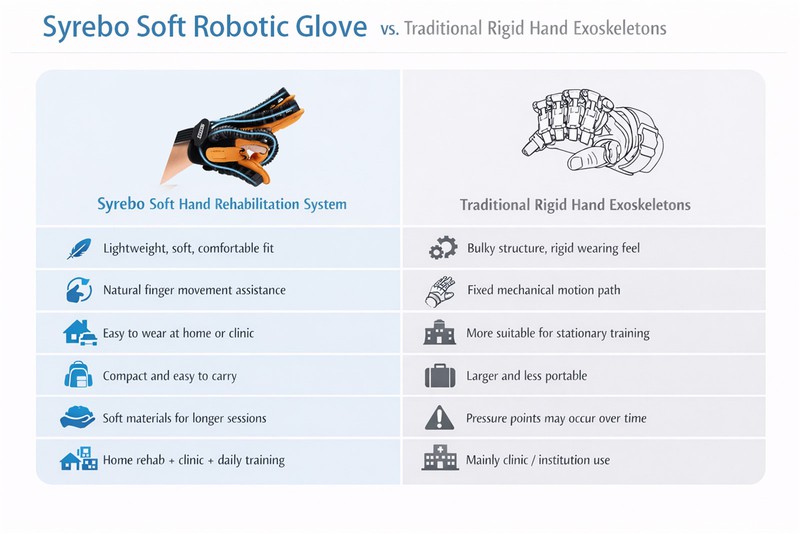
Rigid systems:
·困難 のための 痙性 または weak hands
·Mechanical 運動 feel
·Lower long-term コンプライアンス
Syrebo ソフト外骨格:
·簡単 glove-like wearing
·Natural 運動 サポート
·Higher 患者 engagement そして adherence
Syrebo focuses の上に 機能回復 through natural 運動, not just mechanical サポート.
Key benefits:
·Enhanced neuroplasticity through repetitive motion
·Higher 療法 コンプライアンス due に comfort
·Suitable のための 脳卒中, 片麻痺, そして post-surgery リハビリテーション
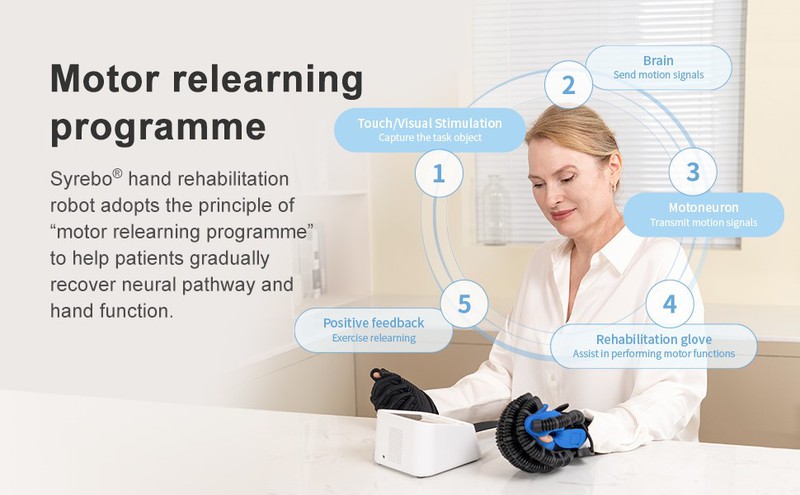
リハビリテーション robotics である moving toward:
·Lightweight ウェアラブル devices
·患者-centered design
·Home-based リハビリテーション
·Functional 運動 トレーニング
Syrebo である part of this shift toward more natural そして 効果的 回復 solutions.
Conclusion
Rigid exoskeletons focus の上に mechanical 運動 サポート. Syrebo ソフト外骨格 gloves focus の上に natural 機能回復.