Literature sharing: ブレイン・コンピュータ・インターフェース-Based Soft ロボティック Glove リハビリテーション のための 脳卒中 - 脳卒中 センター
Background:Upper limb impairment である common の中に 脳卒中 そして ができる を持つ devastating 影響 の上に 毎日 lives of 脳卒中 survivors. Conventional リハビリテーション strategies targeting motor impairments の中に 脳卒中 survivors 含む multidisciplinary treatments of 理学療法 そして 作業療法. Recently, techniques such as 制約-induced 運動 療法, ミラーセラピー (MT), そして ロボット-assisted 療法 utilise end effector systems. While such approaches を持つ されている reported に である efficacious の中に several studies, they largely 必要とする minimum level of residual 運動 of paretic limbs に carry out, そして this excludes large proportion of 脳卒中 patients, such as の中に case of CIMT. 使用して ブレイン・コンピュータ・インターフェース (BCI)-based motor imagery (MI) presents alternative means of リハビリテーション に address issue faced by patients と共に negligible residual 運動機能.
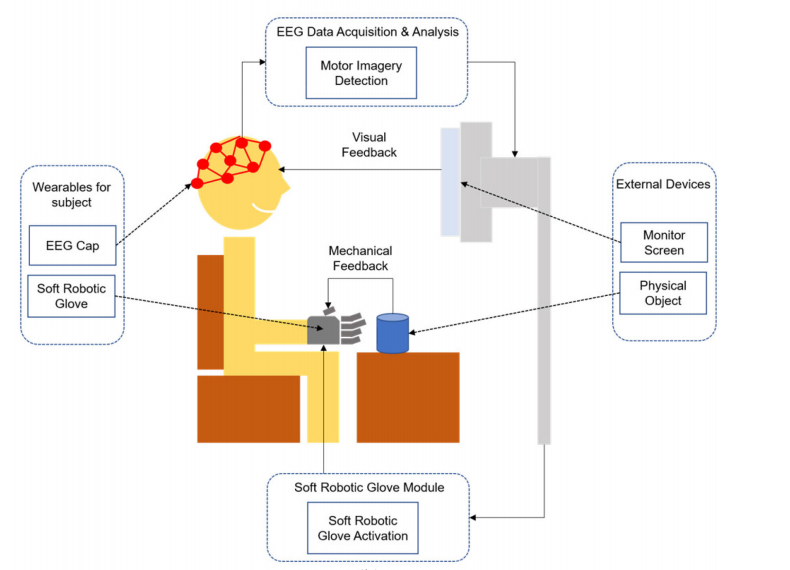
目標: This randomized controlled feasibility 研究 investigates ability のための 臨床 アプリケーション of ブレイン・コンピュータ・インターフェース-based Soft ロボティック Glove (BCI-SRG) incorporating activities of 毎日 living (ADL)-oriented tasks のための 脳卒中リハビリテーション.
Methods: Eleven recruited chronic 脳卒中 patients だった randomized into BCI-SRG または Soft ロボティック Glove (SRG) グループ. Each グループ underwent 120-分 intervention per セッション comprising 30-分 標準 arm 療法 そして 90-分 experimental 療法 (BCI-SRG または SRG). に perform ADL tasks, BCI-SRG グループ used motor imagery-BCI そして SRG, while SRG グループ used SRG without motor imagery-BCI. Both groups received 18 セッション of intervention over 6 週間. Fugl-Meyer Motor Assessment (FMA) そして Action 研究 Arm Test (ARAT) scores だった measured で baseline (週 0), post-intervention (週 6), そして follow-ups (週 12 そして 24). の中に total, 10/11 patients completed 研究 と共に 5 の中に each グループ そして 1 dropped out.
Results: Though there だった no significant intergroup differences のための FMA そして ARAT during 6-週 intervention, 改善 of FMA そして ARAT seemed に sustain beyond 6-週 intervention のための BCI-SRG グループ, as compared と共に SRG control. Incidentally, all BCI-SRG subjects reported sense of vivid 運動 of 脳卒中-impaired upper limb そして 3/5 had this phenomenon persisting beyond intervention while none of SRG した.
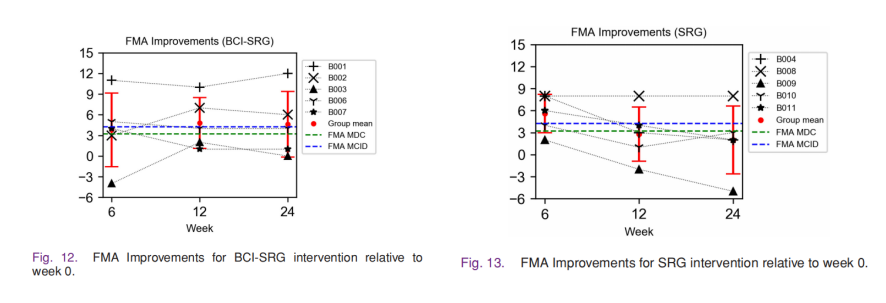
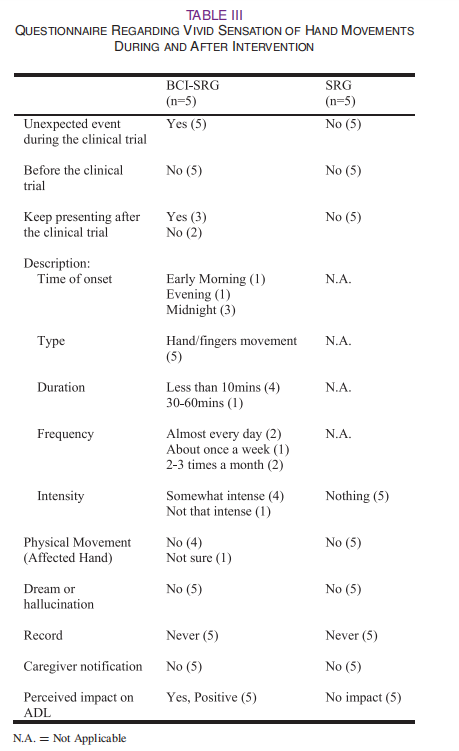
Conclusion: BCI-SRG suggested probable trends of sustained functional improvements と共に peculiar kinesthetic 経験 outlasting active intervention の中に chronic 脳卒中 despite dire need のための large-scale investigations に verify statistical significance. Adding BCI に soft ロボティック トレーニング のための ADL-oriented 脳卒中リハビリテーション holds promise のための sustained improvements そして elicited perception of motor movements.
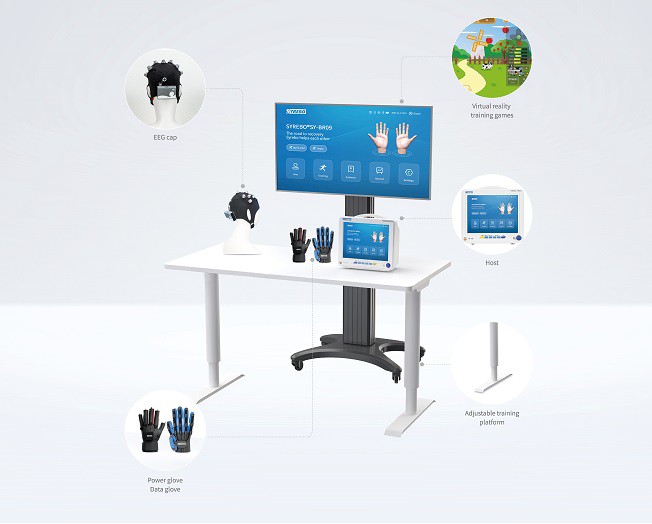
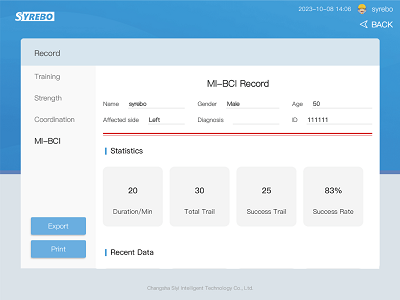
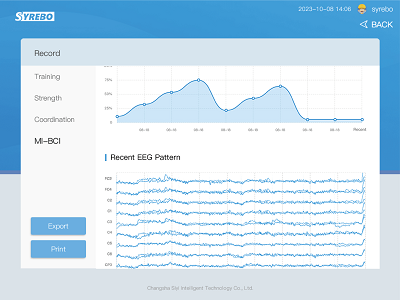
As 革新的 ブレイン・コンピュータ・インターフェース-based soft ロボティック glove (BCI-SRG), Syrebo hand リハビリテーションロボット (BCI) based の上に principles of motor imagery そして neural plasticity ができる achieve "perception-control" bidirectional closed-loop neural stimulation, significantly improving リハビリテーション 効果. It adopts brain-inspired algorithm に capture EEG, ensuring データ 正確さ. で same time, It ができる collect EEG signal データ そして ができる である viewed の上に ソフトウェア, providing references のための リハビリテーション programs そして 臨床 研究. Request demo & trial: [email protected]
Reference: Cheng N, Phua KS, Lai HS,et al. ブレイン・コンピュータ・インターフェース-Based Soft ロボティック Glove リハビリテーション のための 脳卒中. IEEE Trans Biomed Eng. 2020 Dec;67(12):3339-3351.