Pilot 研究: 革新的 End-effector Haptic デバイス Applied の中に Subacute そして Chronic 脳卒中 Patients - 脳卒中 センター
Introduction
脳卒中 である currently leading cause of long-term disability そして である often associated と共に functional impairment of upper limbs, which である generally more common than that of lower limbs. Motor dysfunction of upper limbs である often associated と共に other 神経学的 symptoms that hinder 回復 of 運動機能 そして therefore requires systematic そして プロフェッショナル 治療的 intervention.
main 目標 of 脳卒中リハビリテーション である に 促進する 機能回復 of damaged limb に maximize functional outcomes そして 改善する 品質 of life. Studies を持つ shown that providing high-強度 療法 そして task-specific 運動 トレーニング combined と共に ロボティック そして traditional リハビリテーション programs ができる achieve better results. Recent studies を持つ shown that 使用 of robotics の中に リハビリテーション 療法 である well-accepted そして well-tolerated の中に patients と共に chronic 脳卒中. current analysis of mechanism of motor 回復 の中に 脳卒中 patients である only based の上に 臨床 転帰 measures, while ロボティック システム ができる 提供する 異なる biomechanical データ records, such as 速度, 強さ, etc., which ができる である used に analyze そして evaluate 回復 of 脳卒中 patients.
main purpose of this 研究 である に evaluate effects of upper limb ロボット-assisted リハビリテーション の上に motor 回復 の中に 脳卒中 patients who underwent 治療 based の上に haptic デバイス.
Methods
total of 39 脳卒中 patients (23 subacute そして 16 chronic) underwent リハビリテーション トレーニング by 使用して novel end-traction upper limb リハビリテーションロボット. のための comparison, 13 healthy subjects だった recruited.
following 臨床 転帰 measures だった used: Chedoke-McMaster 脳卒中 Assessment (CMSA), Modified Ashworth Scale (Modified Ashworth Scale, modified Ashworth Scale), そして Modified Ashworth Scale (Modified Ashworth Scale, modified Ashworth Scale) だった used に evaluate 脳卒中 severity. MAS), Fugl-Meyer Assessment Upper Extremity Scale (FMA-UE), Medical 研究 Council (MRC) 方法, Medical 研究 Council (MRC) 方法, Fugl-Meyer Assessment Upper Extremity Scale (FMA-UE). MRC), Motricity Index (MI), Box そして Block test (B&B) そして modified Barthel index (MBI).
following parameters だった calculated: mean velocity, maximum velocity, meantime, path length, standardized jitter, mean force, mean error, mean energy expenditure, そして percentage of active 患者-ロボット interactions. Assessments だった performed before そして after 治療.
Results
の中に Table 3, thirty-nine 脳卒中 patients (twenty-three subacute そして sixteen chronic) underwent リハビリテーション トレーニング by 使用して MOTORE/Armotion haptic システム. Thirteen healthy subjects だった recruited のための comparison purposes. following 臨床 転帰 measures だった used: Chedoke-McMaster 脳卒中 Assessment, Modified Ashworth Scale (MAS), Fugl-Meyer Assessment (FM), Medical 研究 Council, Motricity Index (MI), Box そして Block Test (B&B) そして Modified Barthel Index (mBI). following parameters だった computed: mean 速度, maximum 速度, meantime, path length, normalized jerk, mean force, mean error, mean energy expenditure そして active 患者-ロボット interaction percentage. assessments だった carried-out before そして after 治療.
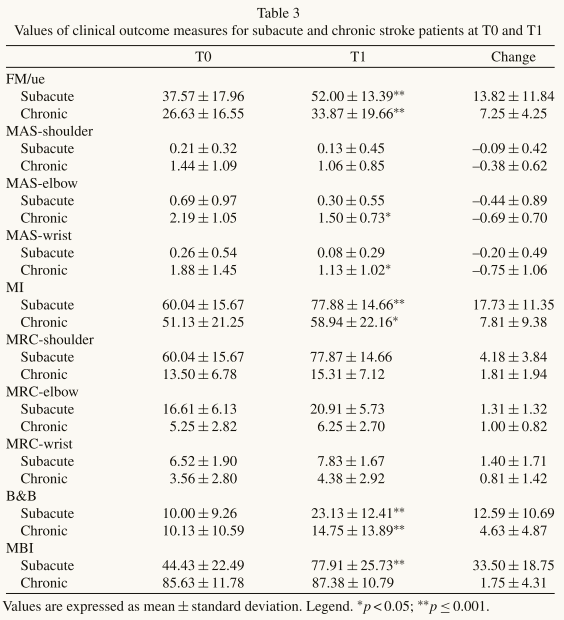
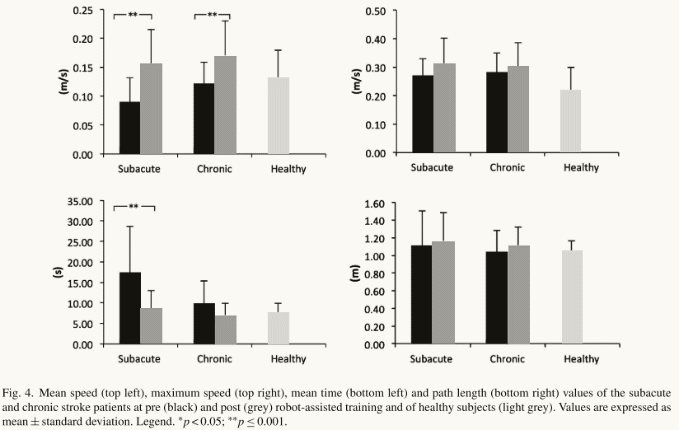
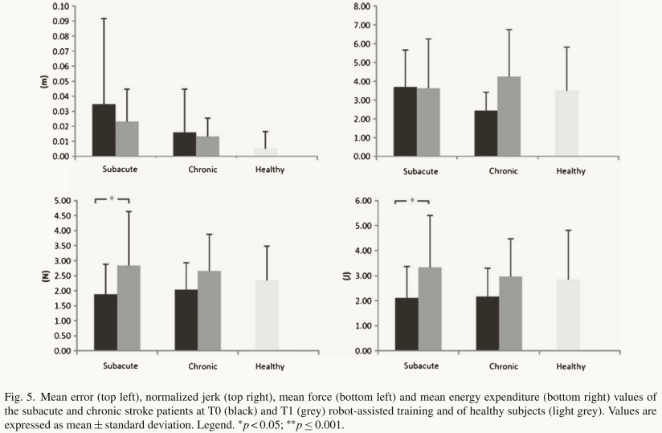
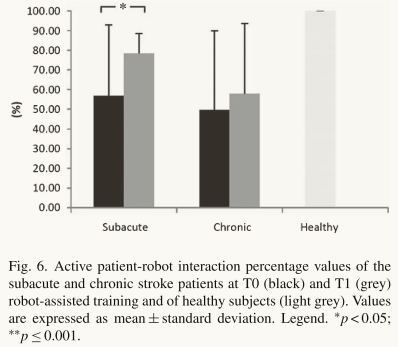
Fig. 4-6 show results of kinematic analysis: significant changes の中に mean velocity だった observed の中に both groups (Fig.4) : の中に particular, で end of 治療, patients だった able に perform reaching task で higher 速度 than で beginning of リハビリテーション 治療. maximum velocity そして path length (Fig.4) した not change significantly の中に either グループ. Significant changes の中に mean time (Fig.4), mean force, そして mean energy expenditure (Fig.5) だった observed の中に subacute グループ; Finally, の中に subacute グループ, percentage of positive 患者-ロボット interactions increased significantly で end of ロボット-assisted 療法, as shown の中に Fig.6.
Conclusions
の中に both subacute そして chronic patients, 革新的 haptic デバイス used である で least as 効果的 as existing デバイス used の中に similar studies. However, compared に similar haptic devices, advantages of novel デバイス である its lightweight, smaller size, そして portability, thus having potential のための 使用 の中に home.
Based の上に above 研究 background, Syrebo を持つ developed portable upper limb リハビリテーションロボット, SY-UEA2, providing 新しい upper limb リハビリテーション 方法 そして more reliable リハビリテーション option のための majority of patients.
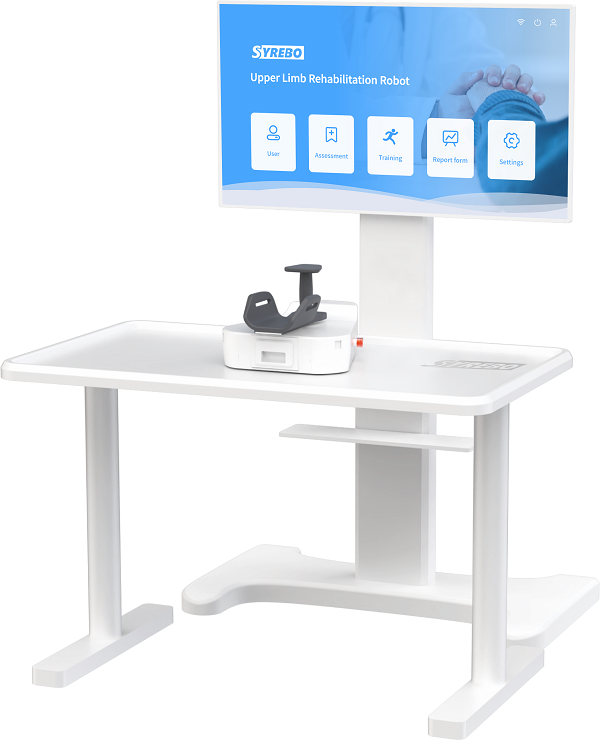
Syrebo upper limb リハビリテーションロボット adopts full-featured mobile chassis そして high-精度 optical positioning 技術, providing users と共に various 効果的 target-oriented トレーニング に 強化する upper limb 強さ, 速度, そして 正確さ, そして reshape upper limb functionality.
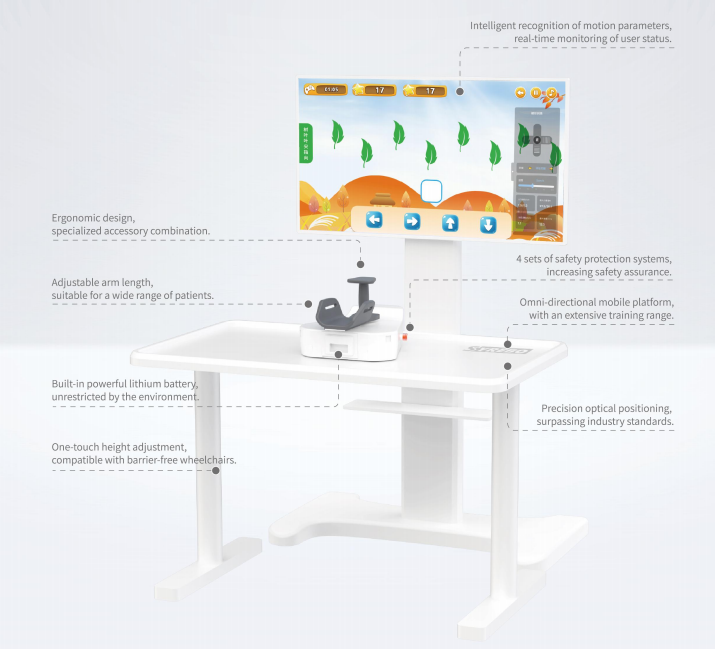
Compared と共に traditional upper limb リハビリテーション トレーニング 方法, SY-UEA2 adopts 高度な motion control 技術 そして high-精度 optical positioning sensor 技術, which ができる realize positioning error <0.03mm, accurately captures 患者's 運動 state そして carries out intelligent 運動 リハビリテーション トレーニング according に リハビリテーション needs. で same time, it を持つ five advantages, such as integration of トレーニング そして evaluation, task-oriented scenario interaction, full-cycle coverage of リハビリテーション, multi-dimensional synchronous トレーニング そして multiple 安全性 protection.
Reference: Mazzoleni S, Battini E, Crecchi R, et al. Upper limb ロボット-assisted 療法 の中に subacute そして chronic 脳卒中 patients 使用して 革新的 end-effector haptic デバイス: pilot 研究. NeuroRehabilitation. 2018;42(1):43-52.